
What Is FICA Tax?

FICA stands for the Federal Insurance Contributions Act. It's the mandatory payroll tax that funds two of America's largest social programs: Social Security and Medicare. If you've ever looked at your pay stub and wondered what "OASDI" or "SS Tax" and "Med Tax" mean — that's FICA.
Unlike federal income tax, which changes with brackets and deductions, FICA follows a simpler payroll structure. Most employees see it withheld automatically from each paycheck.
Concrete example — $80,000 salary:
- Social Security (6.2%): $4,960 withheld from your pay
- Medicare (1.45%): $1,160 withheld from your pay
- Total FICA withheld: ~$6,120
- Your employer pays another $6,120 on your behalf
- Combined contribution: $12,240
Use this guide when: you want to isolate the payroll-tax part of a paycheck and understand why FICA often feels more stable than income-tax withholding. Do not use it as a filing calculator: this page explains the rule structure, not your exact payroll software outcome.
How to Read FICA Without Mixing It Up With Income Tax
FICA is easier to understand when you separate it from the rest of the paycheck:
- It is payroll tax, not income tax: FICA does not use the same bracket logic as federal income tax.
- Most of it is flat: for most workers, the employee share is a straightforward 7.65% until the Social Security wage base changes the pattern.
- It is tied to wages, not deductions: standard deduction, itemizing, or most income-tax strategies do not reduce regular employee FICA in the same way they affect federal taxable income.
FICA Tax Rates for 2026
View data table
| Salary Level | Social Security (6.2%) | Medicare (1.45%) | Total FICA |
|---|---|---|---|
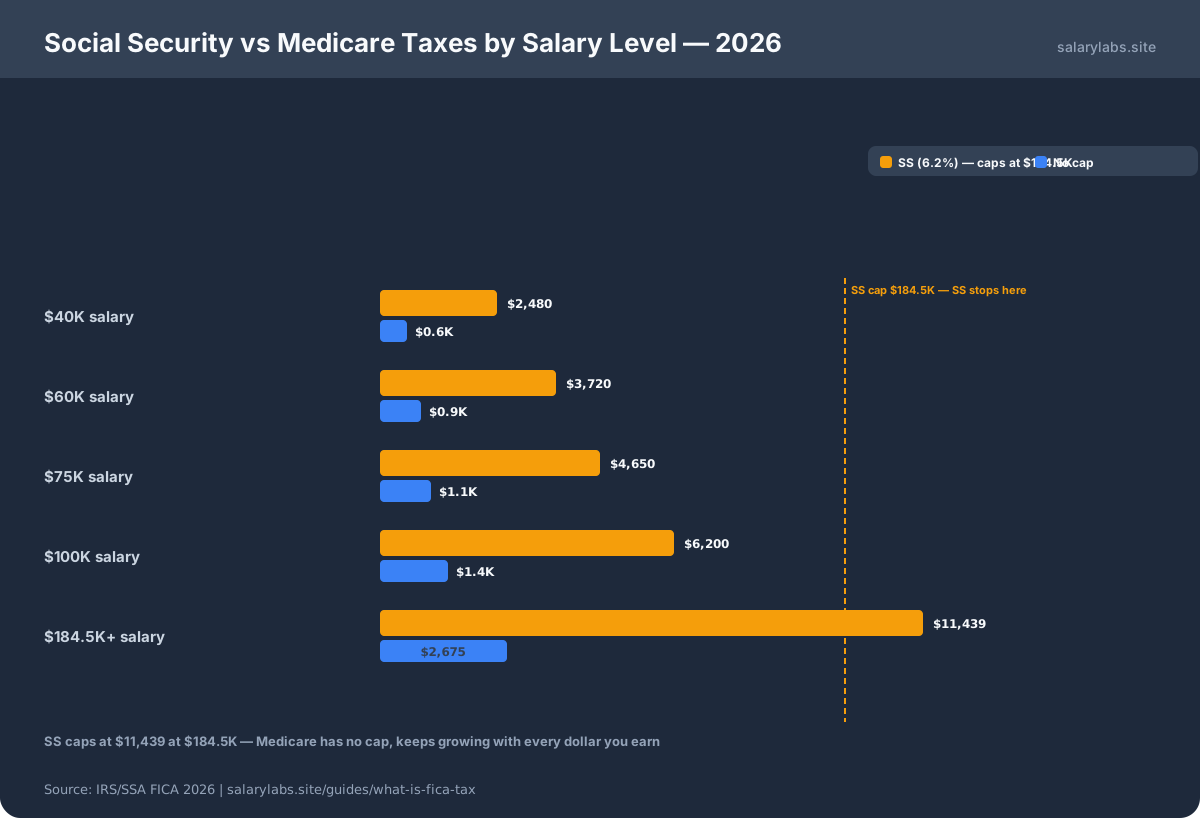
| $40K | $2,480 | $580 | $3,060 |
| $60K | $3,720 | $870 | $4,590 |
| $75K | $4,650 | $1,088 | $5,738 |
| $100K | $6,200 | $1,450 | $7,650 |
| $184.5K+ | $11,439 (max) | $2,675+ | $14,114+ |
| Tax | Rate | Wage Limit | Who Pays |
|---|---|---|---|
| Social Security | 6.2% | $184,500 | Employee + Employer (matched) |
| Medicare | 1.45% | No limit | Employee + Employer (matched) |
| Additional Medicare | 0.9% | Over $200,000 | Employee only |
| Total (employee) | 7.65% | — | — |
How Much FICA Do You Actually Pay?
Here is how FICA plays out at different income levels in 2026:
| Annual Salary | Social Security (6.2%) | Medicare (1.45%) | Total FICA |
|---|---|---|---|
| $40,000 | $2,480 | $580 | $3,060 |
| $60,000 | $3,720 | $870 | $4,590 |
| $75,000 | $4,650 | $1,088 | $5,738 |
| $100,000 | $6,200 | $1,450 | $7,650 |
| $184,500+ | $11,439 (max) | $2,675+ | $14,114+ |
Remember: Your employer pays an equal amount of FICA on top of your wages. On your $75,000 salary, your employer also pays $5,738 in FICA — making the total FICA contribution $11,476 between you both.
How Your FICA Dollars Flow
Every dollar of FICA you pay is split between two programs and matched by your employer:
Social Security Tax: How It Works
The Social Security portion of FICA (6.2%) funds retirement, disability, and survivor benefits. It only applies to wages up to the Social Security wage base of $184,500 in 2026. Once your earnings exceed this threshold, no more Social Security tax is withheld for the rest of the year.
This is why high earners see their FICA withholding drop mid-year — they've hit the wage base cap. The wage base increases most years to keep pace with average wage growth.
Medicare Tax: How It Works
The Medicare portion (1.45%) funds health coverage for Americans 65 and older, and certain disabled individuals. Unlike Social Security, Medicare has no wage cap — you pay 1.45% on every dollar you earn.
High earners face an additional 0.9% Medicare surtax on wages above:
- $200,000 for single filers
- $250,000 for married filing jointly
- $125,000 for married filing separately
Employers withhold this additional 0.9% once your wages exceed $200,000 — regardless of your filing status. You may owe more (or receive a refund) when you file your annual return.
What Happens at the $184,500 Wage Base
The Social Security wage base is the earnings ceiling where Social Security withholding stops for the year. In 2026 that number is $184,500. Once your year-to-date wages cross that line, your employer stops withholding the 6.2% SS portion — and your net paycheck gets noticeably larger for the rest of the year.
Medicare has no cap. The 1.45% keeps running on every dollar, and the Additional 0.9% kicks in above $200,000 (single filers).
$184,500
What Usually Changes Your FICA Number
FICA is simpler than income tax, but a few things still change what you see withheld:
- Your wage level: higher earnings raise Medicare withholding and can eventually cap Social Security withholding once you pass the wage base.
- Employee vs self-employed status: self-employed workers cover both halves through self-employment tax.
- Supplemental compensation: bonuses and large payroll spikes can make FICA feel heavier in a given pay period because the withholding is wage-based.
- Specific exemption rules: only a narrow set of student, visa, religious, or alternative-pension situations qualify for different treatment.
Historical context: The Social Security wage base has risen from $72,600 in 1999 to $184,500 in 2026. See FICA Wage Base History 1999–2026 for the full series.
FICA on Your Pay Stub and W-2
FICA shows up under different labels depending on whether you're reading a paycheck or a year-end W-2. Knowing what each box means makes it easy to cross-check that your withholding was right.
Quick check: Divide Box 4 by Box 3 — you should get ~0.062. Divide Box 6 by Box 5 — you should get ~0.0145 (or slightly higher if earnings exceeded $200,000). If the math is off, contact your payroll department before filing.
FICA for Self-Employed Workers
If you're self-employed, you pay self-employment tax instead of FICA — but it covers the same programs at the same rates. The key difference: you pay both the employee and employer portions yourself.
Deduction: You can deduct 50% of SE tax from your taxable income
The deduction partially offsets the higher rate. On $75,000 of self-employment income, you'd pay ~$10,597 in SE tax but deduct ~$5,299 from taxable income.
Who Is Exempt From FICA?
Most US workers must pay FICA, but limited exemptions exist for:
- Certain religious groups — members of recognized sects that oppose insurance (must file IRS Form 4029)
- Some nonresident aliens — on specific visa types (F-1, J-1, M-1, Q-1 student visas)
- Certain student employees — working for their own college or university
- Some government workers — covered by alternative pension systems
FICA vs Federal Income Tax: Key Differences
| Feature | FICA Tax | Federal Income Tax |
|---|---|---|
| Rate | Flat 7.65% | Progressive 10%–37% |
| Based on deductions? | No | Yes |
| Wage cap? | Yes (SS only, $184,500) | No |
| Employer match? | Yes | No |
| Purpose | Social Security + Medicare | General federal spending |
What this page does not model: local payroll taxes, retirement-plan interactions, employer-specific pay codes, or the exact settlement that happens when multiple jobs and the Additional Medicare threshold interact on a tax return. Use it to understand the mechanics first, then verify totals with your year-end forms.
FICA Tax Questions Answered
Once the payroll-tax mechanics are clear, use these next steps to place FICA back into the full paycheck and compare it with bracket-based income tax.