
Minimum Wage by State 2026 — State-by-State Guide

Minimum wage headlines often stop at the federal number, but that misses how the system actually works. In many states and cities, the legal floor that governs take-home pay is much higher than $7.25.
The useful way to read minimum wage data is in layers: federal floor, state floor, then any city or county rule that sits above both. That is why two workers with the same job title can be working under very different pay floors.
Quick fact: The federal minimum wage has been $7.25/hour since July 24, 2009 — over 16 years. Meanwhile, Washington D.C. leads at $17.50/hour, more than double the federal floor. Use this guide to find the wage floor that actually applies to your situation.
Why This Guide Exists On SalaryLabs
This page exists to answer a legal-pay-floor question, not a full compensation question. SalaryLabs uses it to clarify which wage floor actually governs a worker in a state or city before anyone starts annualizing the number, comparing offers, or assuming a posted rate tells the whole story.
That makes this guide most useful as a first-pass context layer. It does not tell you whether the wage is livable in a specific neighborhood, what your exact net pay will be, or whether overtime and local rules change the picture materially.
Best workflow: use this page to identify the legal floor first, then move to Hourly to Salary for annualized gross pay, Take Home Pay for a paycheck estimate, or Overtime Calculator if long weeks are part of the job.
Federal vs State Minimum Wage — Key Difference
The Fair Labor Standards Act (FLSA) sets the federal floor at $7.25/hour. Any state can set a higher rate — and if they do, every employer in that state must pay at least the state minimum. States cannot go below $7.25.
Many states still default to the federal floor, while others index their wage to inflation or raise it through scheduled legislation. That policy split matters more than national rhetoric when you are estimating actual yearly pay.
States with the Highest Posted Minimum-Wage Floors in This 2026 Guide
| State / Jurisdiction | Min Wage (2026) | Annual (40h/wk) | Notes |
|---|---|---|---|
| Washington D.C. | $17.50 | $36,400 | CPI-indexed annually |
| Washington | $16.66 | $34,653 | CPI-indexed annually |
| California | $16.50 | $34,320 | Increased Jan 2026 |
| Connecticut | $16.35 | $34,008 | CPI-indexed after 2026 |
| Massachusetts | $15.75 | $32,760 | Indexed after 2026 |
| New York | $16.00 | $33,280 | NYC; $15.50 rest of state |
| Oregon | $15.45 | $32,136 | Portland area $16.30 |
| Colorado | $14.81 | $30,805 | CPI-indexed annually |
| Minnesota | $10.85 | $22,568 | Large employer rate |
| New Jersey | $15.49 | $32,219 | Increased Jan 2026 |
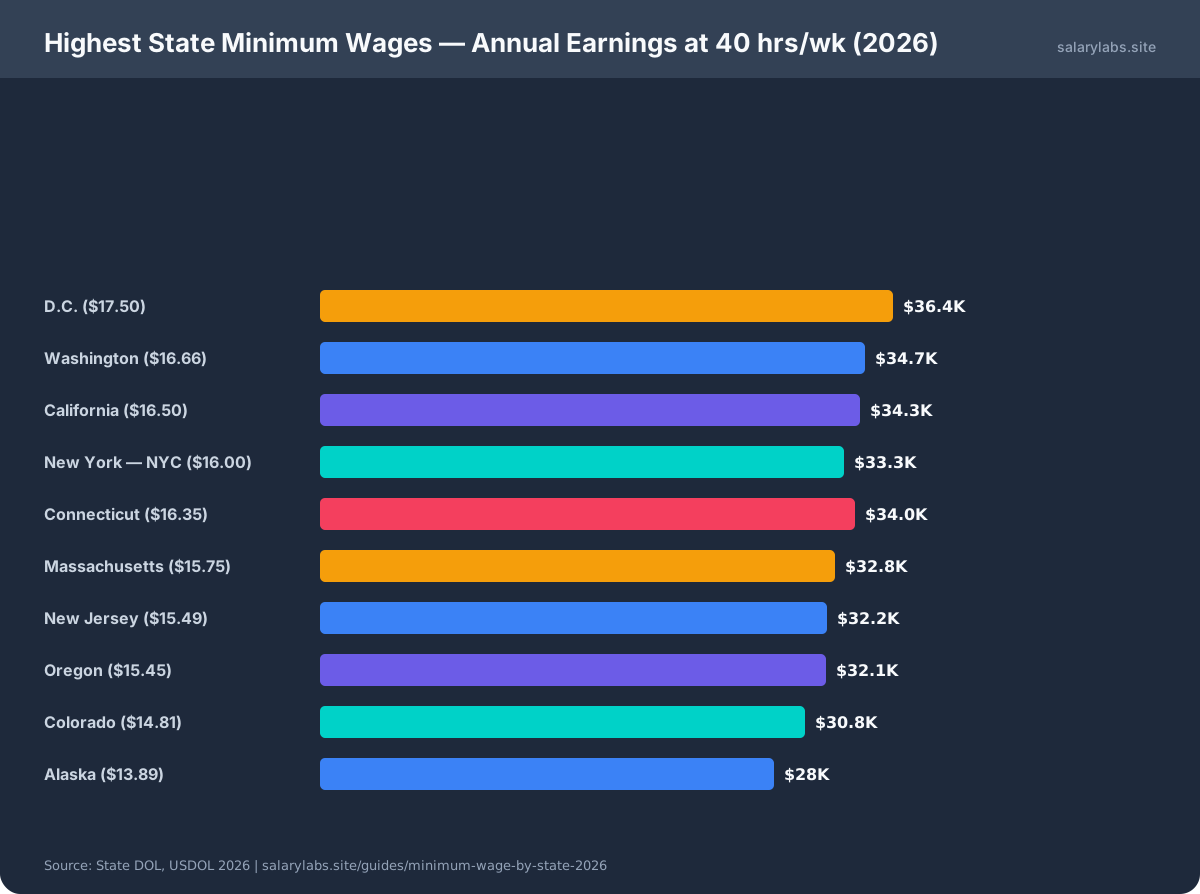
Highest State Minimum Wages — Annual Earnings at 40 hrs/wk (2026) — salarylabs.site View data table
Highest State Minimum Wages — Annual Earnings at 40 hrs/wk (2026) Rank Job / Category Value 1 D.C. ($17.50) 36400 2 Washington ($16.66) 34653 3 California ($16.50) 34320 4 Connecticut ($16.35) 34008 5 Massachusetts ($15.75) 32760 6 New Jersey ($15.49) 32219 7 Oregon ($15.45) 32136 8 New York NYC ($16.00) 33280 9 Colorado ($14.81) 30805 10 Alaska ($13.89) 28888
Minimum Wage Table — State Floors in This 2026 Guide
View data table
| Rank | Job / Category | Value |
|---|---|---|
| 1 | D.C. ($17.50) | 36400 |
| 2 | Washington ($16.66) | 34653 |
| 3 | California ($16.50) | 34320 |
| 4 | Connecticut ($16.35) | 34008 |
| 5 | Massachusetts ($15.75) | 32760 |
| 6 | New Jersey ($15.49) | 32219 |
| 7 | Oregon ($15.45) | 32136 |
| 8 | New York NYC ($16.00) | 33280 |
| 9 | Colorado ($14.81) | 30805 |
| 10 | Alaska ($13.89) | 28888 |
| State | Hourly Rate | Annual Equivalent | Above Federal? |
|---|---|---|---|
| Alabama | $7.25 | $15,080 | No (federal) |
| Alaska | $11.91 | $24,773 | Yes |
| Arizona | $14.70 | $30,576 | Yes |
| Arkansas | $11.00 | $22,880 | Yes |
| California | $16.50 | $34,320 | Yes |
| Colorado | $14.81 | $30,805 | Yes |
| Connecticut | $16.35 | $34,008 | Yes |
| Delaware | $13.25 | $27,560 | Yes |
| Florida | $13.00 | $27,040 | Yes |
| Georgia | $7.25 | $15,080 | No (federal) |
| Hawaii | $14.00 | $29,120 | Yes |
| Idaho | $7.25 | $15,080 | No (federal) |
| Illinois | $15.00 | $31,200 | Yes |
| Indiana | $7.25 | $15,080 | No (federal) |
| Iowa | $7.25 | $15,080 | No (federal) |
| Kansas | $7.25 | $15,080 | No (federal) |
| Kentucky | $7.25 | $15,080 | No (federal) |
| Louisiana | $7.25 | $15,080 | No (federal) |
| Maine | $14.65 | $30,472 | Yes |
| Maryland | $15.00 | $31,200 | Yes |
| Massachusetts | $15.75 | $32,760 | Yes |
| Michigan | $10.33 | $21,486 | Yes |
| Minnesota | $10.85 | $22,568 | Yes (large employers) |
| Mississippi | $7.25 | $15,080 | No (federal) |
| Missouri | $13.75 | $28,600 | Yes |
| Montana | $10.55 | $21,944 | Yes |
| Nebraska | $13.50 | $28,080 | Yes |
| Nevada | $12.00 | $24,960 | Yes |
| New Hampshire | $7.25 | $15,080 | No (federal) |
| New Jersey | $15.49 | $32,219 | Yes |
| New Mexico | $12.00 | $24,960 | Yes |
| New York | $16.00 | $33,280 | Yes (NYC rate) |
| North Carolina | $7.25 | $15,080 | No (federal) |
| North Dakota | $7.25 | $15,080 | No (federal) |
| Ohio | $10.45 | $21,736 | Yes |
| Oklahoma | $7.25 | $15,080 | No (federal) |
| Oregon | $15.45 | $32,136 | Yes |
| Pennsylvania | $7.25 | $15,080 | No (federal) |
| Rhode Island | $15.00 | $31,200 | Yes |
| South Carolina | $7.25 | $15,080 | No (federal) |
| South Dakota | $11.20 | $23,296 | Yes |
| Tennessee | $7.25 | $15,080 | No (federal) |
| Texas | $7.25 | $15,080 | No (federal) |
| Utah | $7.25 | $15,080 | No (federal) |
| Vermont | $13.67 | $28,434 | Yes |
| Virginia | $12.41 | $25,813 | Yes |
| Washington | $16.66 | $34,653 | Yes |
| Washington D.C. | $17.50 | $36,400 | Yes |
| West Virginia | $8.75 | $18,200 | Yes |
| Wisconsin | $7.25 | $15,080 | No (federal) |
| Wyoming | $7.25 | $15,080 | No (federal) |
State context: For a deeper view of what wages actually buy after taxes and cost of living, see Real Take-Home Pay by State 2026 — the full 50-state comparison.
Minimum Wage vs Living Wage
Even at $16.66/hour (Washington state's 2026 rate), annual earnings of ~$34,650 can still sit below what MIT's Living Wage Calculator shows for a single adult in many US metros. In Seattle, the cited living-wage reference for one adult with no children is around $45,000/year — meaning the highest posted state minimum wage in this guide can still leave a noticeable gap before basic living expenses are fully covered.
This gap between minimum wage and living wage is why many workers supplement income with overtime — and why understanding your overtime rights matters. See the Overtime Calculator to understand how much more you earn for hours worked beyond 40 per week.
How Minimum Wage Increases Affect Take-Home Pay
A minimum wage increase does not flow through one-for-one to take-home pay. Payroll taxes, federal withholding, and credit eligibility all affect the final number. This table is a simplified illustration, not a replacement for state-specific tax calculations:
| Hourly Rate | Annual Gross | Est. Federal Tax | FICA | Annual Net (no state tax) |
|---|---|---|---|---|
| $7.25 (federal min) | $15,080 | ~$0* | $1,154 | ~$13,926 |
| $12.00 | $24,960 | ~$985 | $1,909 | ~$22,066 |
| $15.00 | $31,200 | ~$1,967 | $2,387 | ~$26,846 |
| $17.00 | $35,360 | ~$2,817 | $2,705 | ~$29,838 |
| $20.00 | $41,600 | ~$4,367 | $3,182 | ~$34,051 |
* Many minimum wage earners qualify for the Earned Income Tax Credit (EITC), which can result in a net refund even with minimal tax liability. Assumes standard deduction, single filer, 2080 hours.
States Where Minimum Wage Can Stretch Further in Real Terms
Raw minimum wage figures do not tell the whole story. A higher legal wage in an expensive city can still produce weaker real purchasing power than a lower wage in a cheaper market:
- High nominal wage: coastal markets can post the biggest hourly figures, but rent and transportation erase part of the gain.
- Lower nominal wage: some lower-cost states stretch further on essentials even when the posted hourly rate is smaller.
- Useful reading: compare legal minimum wage with local housing and tax burden, not with wage tables alone.
Minimum Wage Questions Answered
What is the federal minimum wage in 2026?
$7.25 per hour. It has not changed since July 24, 2009, so the gap between the federal floor and many state rates is now a core part of the story.
What annual salary is minimum wage?
At the federal floor, full-time work at 2,080 hours equals $15,080 a year before taxes. State and city minimum wages can push that annual figure much higher, which is why local rates matter more than the federal number in many markets.
Is minimum wage going up in 2026?
Many states have scheduled increases in 2026. States with CPI-indexed rates (Washington, Colorado, Minnesota, others) automatically adjusted in January 2026. California, Illinois, New York, and New Jersey also have scheduled increases. Check your state's Department of Labor for exact effective dates and amounts.
Can a city have a higher minimum wage than the state?
Yes. Many cities and counties set higher local floors than the surrounding state. In practice, workers should check federal, state, and local rules together.
Do tipped workers have a different minimum wage?
Yes. Federal tipped-wage rules differ from the standard minimum wage, and several states require a higher tipped floor or no tip credit at all. Always check the rule where the job is located.